
Dry skin may be itchy, highly strained, dry and even painful. This may usually be even after washing the face, in air-conditioned rooms, or even when in cold temperatures. The positive aspect is that the correct moisturizer has the potential to make a difference. Not every good moisturizer makes the skin soft in several minutes, and that is all. It assists in fortifying the dermal boundary, trapping water, decreasing irritation, and ensuring that the skin appears peachy-fleshy and beautiful.
Here we are going to deconstruct what dry skin exactly requires, what ingredients will work best, how one should select a particular moisturizer, and what type of formula can be beneficial at various stages of dryness. This article will make you make a wiser decision in case you ever wondered what the best moisturiser to use with dry skin is.
Table of Contents
What Is Dry Skin?
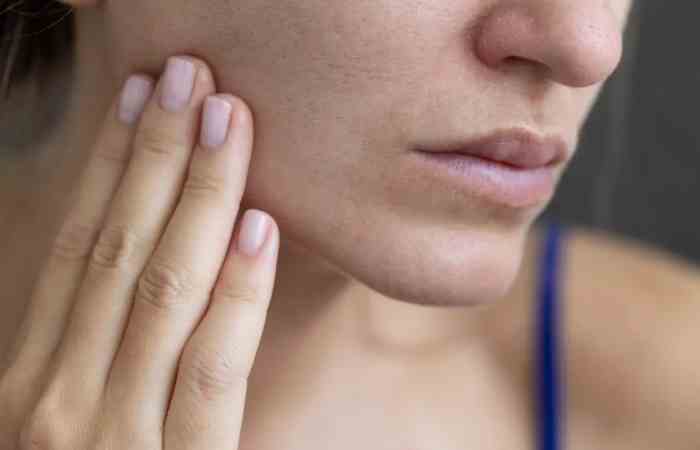
Dry skin is a skin type or condition that lacks enough moisture and natural oils to stay soft and comfortable. When the skin barrier becomes weak, moisture escapes more easily, and the skin starts to feel rough, tight, or itchy. https://www.aad.org/public/everyday-care/skin-care-basics/dry/dry-skin-relief
Dry skin can happen for many reasons:
- Cold or dry weather
- Hot showers and harsh cleansing
- Aging
- Dehydration
- Over-exfoliation
- Skin conditions such as eczema or dermatitis
- Using products with strong alcohol or fragrance
A moisturizer for dry skin should do two things well: add moisture and prevent moisture loss.
What Makes a Moisturizer Good for Dry Skin?
Not all moisturizers are suitable with dry skin. They are too light, too short-lived, and some of the ingredients may irritate sensitive dry skin.
An effective moisturizer for dry skin normally consists of a combination of:
- Humectants– draw water into skin.
- Emollients– soften rough skin and make it smooth.
- Occlusives – form a coating to block the loss of water.
Simple definition of these ingredients
| Ingredient Type | What It Does | Common Examples |
| Humectants | Pull water into the skin | Hyaluronic acid, glycerin, aloe vera, panthenol |
| Emollients | Soften and smooth the skin | Ceramides, squalane, shea butter, fatty acids |
| Occlusives | Seal moisture inside the skin | Petrolatum, dimethicone, lanolin, beeswax |
The best moisturizer for dry skin often combines all three.
Best Ingredients for Dry Skin
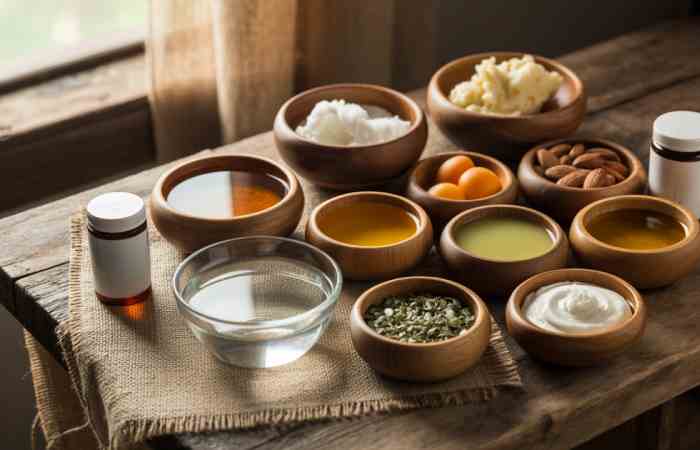
If your skin is dry, ingredient quality matters more than fancy packaging. A rich moisturizer with the right formula can be much more effective than a trendy product with little skin support.
Ingredients to look for
| Ingredient | Why It Helps Dry Skin |
| Glycerin | Draws water into the skin and keeps it hydrated |
| Hyaluronic acid | Helps the skin hold moisture and feel plumper |
| Ceramides | Repair the skin barrier and reduce moisture loss |
| Shea butter | Nourishes and softens very dry areas |
| Squalane | Lightweight but deeply nourishing |
| Panthenol | Soothes irritation and supports healing |
| Niacinamide | Helps strengthen the barrier and improve texture |
| Petrolatum | Excellent for sealing in moisture, especially at night |
Ingredients to use carefully
| Ingredient | Why to Be Careful |
| Fragrance | Can irritate dry or sensitive skin |
| Alcohol denat | May cause extra dryness |
| Strong acids | Can be too harsh if the skin barrier is already damaged |
| Essential oils | Can trigger irritation in some people |
Best Moisturizer Types for Dry Skin
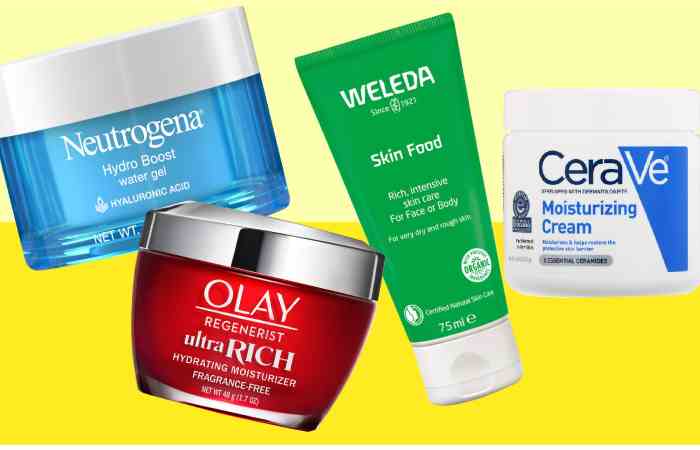
Different dry skin needs different textures. What works for mild dryness may not be enough for severely dry skin.
| Moisturizer Type | Texture | Best For | Benefits | Limitations |
| Lotion | Light and spreadable | Mild dry skin | Easy to use, absorbs quickly | May not be rich enough for severe dryness |
| Cream | Thicker and more nourishing | Moderate dry skin | Good balance of hydration and comfort | Can feel heavy for oily skin |
| Ointment | Very thick and greasy | Very dry, cracked, or irritated skin | Strong moisture seal, excellent overnight use | May feel too heavy in daytime |
| Gel-cream | Light but hydrating | Dry but acne-prone skin | Hydrating without clogging feel | Not always rich enough for severe dryness |
| Balm | Dense and protective | Very dry patches | Great for locking in moisture | Can be too heavy for full-face daytime use |
How to Choose the Best Moisturizer for Dry Skin
A good moisturizer is not the end of the selection since it determines the brand of the moisturizer. It is about modification of the formula to suit the real needs of the skin.
Check your level of dryness
In instances where the skin is not tight to the extreme, a cream or lotion that has fatty properties may suffice. To treat the skin that feels dry and scaly, coarse, or easy to crack, a cream or ointment with a higher consistency may work better.
Rediscover your remembrance of the skin.
On the one hand, in case of an easily stinging skin, fragrance-free, creamy but barrier-repair product like ceramides and panthenol should be used.
Consider the weather
During dry seasons in the interior or winter, much moisture is typically demanded by the skin. A light cream will be more suitable in rain circumstances..
Defend your schedule with the moisturizer.
A thick ointment may not be convenient during the morning time especially when you wear makeup. Then wear a cream during the day and a formula heavier at night.
Best Moisturizer Formula for Different Dry Skin Needs
| Skin Concern | Better Moisturizer Choice | Why It Works |
| Mild dryness | Light cream or lotion | Hydrates without feeling too heavy |
| Very dry skin | Rich cream or balm | Gives stronger moisture support |
| Flaky skin | Cream with ceramides and glycerin | Helps soften rough patches and repair the barrier |
| Sensitive dry skin | Fragrance-free cream | Reduces irritation risk |
| Dry acne-prone skin | Gel-cream or non-comedogenic cream | Hydrates without a greasy feel |
| Mature dry skin | Cream with peptides, ceramides, and humectants | Supports hydration and softness |
How to Use Moisturiser the Right Way
Even the best moisturizer can underperform if it is not applied properly.
Simple application tips
- Apply on slightly damp skin.
- This helps trap water better.
- Use it right after cleansing.
- Wait not too long after the washing of your face.
- Apply enough product.
There is a risk that a thin, incomplete layer would not have sufficient protection.
Layer if necessary.
In the case of extremely dry skin, hydrating serum should first be used until it has been covered with moisturizer.
Use it both morning and night.
Particular importance is given to nighttime since the skin is re-injured with sleep.
Morning vs Night Moisturizer for Dry Skin
| Time | Best Type | Reason |
| Morning | Lightweight cream or rich lotion | Feels comfortable under sunscreen and makeup |
| Night | Thick cream or ointment | Helps repair and lock in moisture overnight |
A simple rule: lighter in the morning, richer at night.
Common Mistakes People Make with Dry Skin
Many people keep using moisturizer but still feel dry because they are making small mistakes.
Mistakes to avoid
- Washing the face with hot water
- Using harsh foam cleansers
- Applying too little moisturizer
- Skipping moisturizer after cleansing
- Using fragranced products that irritate the skin
- Not reapplying during very dry weather
- Scrubbing the skin too often
Dry skin often improves faster when you simplify your skincare routine instead of adding too many products.
Best Skincare Routine for Dry Skin
A moisturizer works best as part of a gentle routine.
Morning routine
- Gentle cleanser or just lukewarm water
- Hydrating serum if needed
- Moisturizer
- Broad-spectrum sunscreen
Night routine
- Gentle cleanser
- Hydrating serum or essence
- Rich moisturizer or repair cream
- Ointment on very dry patches if needed
Natural vs Dermatologist-Style Moisturizers
Some people prefer natural products, while others want clinical formulas. Both can work, but the ingredients matter most.
| Type | Pros | Cons | Best For |
| Natural-style moisturizer | Often feels nourishing and gentle | May still contain irritating essential oils | People who prefer simpler formulas |
| Dermatologist-style moisturizer | Often barrier-focused and fragrance-free | May feel less “luxury” | Sensitive, dry, or damaged skin |
A “natural” label does not always mean better for dry skin. A well-formulated moisturizer with ceramides, glycerin, and occlusives is often more effective than a trendy formula with weak hydration.
Should Dry Skin Use Oil or Moisturizer?
This is a common question. The solution is: they all can assist, yet they are different.
- Moisturisers provide hydration and promote the skin cover.
- Face oils act to enhance the retention of moistures but they fail to hydrate the skin alone.
Should you have a very dry skin then you can apply a moisturizer and also apply a couple of drops of oil on top. With that, dry skin typically does not get enough oil.
Best Time to Apply Moisturizer.
The best moment is during several minutes of washing your face or having a shower. It is at that time when the skin still possesses surface moisture, and it can be captured by the moisturizer better.
In the case of body skin, the moisturizer should be applied immediately after shower when the skin is in a slightly wet ay. This is only applicable when using dry arms, legs, elbows and hands.
What Dry Skin Really Needs from a Moisturizer
At its core, dry skin needs three things:
- Water to improve hydration
- Lipids to strengthen the barrier
- A protective layer to slow water loss
That is why the most effective moisturizer often feels richer than a basic lotion. It is not just making the skin feel nice for a moment. It is helping the skin function better.
Which Moisturizer Is Best?
Here is a simple decision table to help you choose quickly.
| Dry Skin Type | Best Choice |
| Mild dryness | Hydrating lotion or light cream |
| Moderate dryness | Ceramide cream or rich moisturizer |
| Severe dryness | Thick cream or ointment |
| Sensitive dryness | Fragrance-free barrier cream |
| Dry patches | Balm or ointment on top of moisturizer |
| Dry and acne-prone | Non-comedogenic gel-cream |
Conclusion
The most effective moisturizer in the case of dry skin is the one that provides lasting hydration, heals the skin barrier, and is comfortable enough to apply it on a daily basis. A rich cream with a combination of ingredients such as glycerin, ceramides, hyaluronic acid, and shea butter is the best place to start when a person is in need of the cream. Your skin can be very dry and cracked, in which case an ointment or balm might be even better, especially at night.