
Table of Contents
Should Powder Blush Go Before or After Setting Powder?
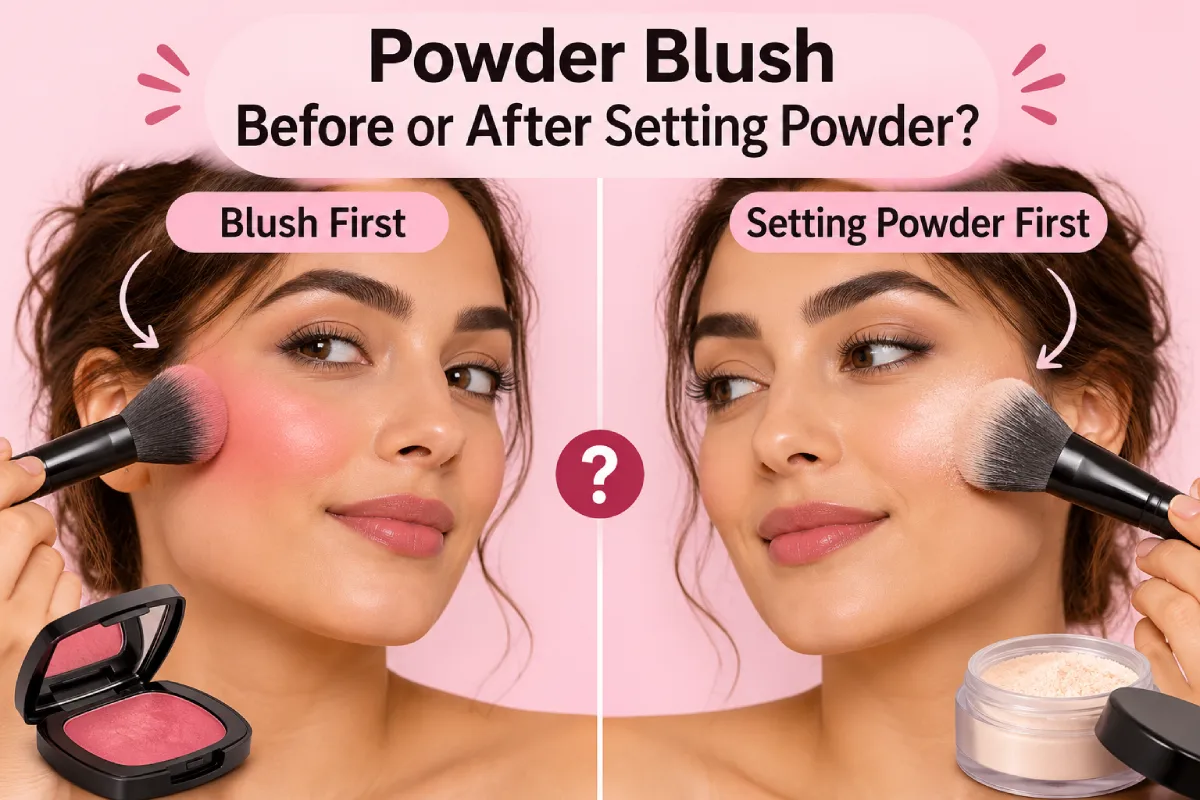
Powder blush should usually go after setting powder. That order gives you a smoother base, helps the blush blend without catching on damp foundation, and makes it easier to control color payoff. When blush goes on too early, it can stick unevenly or fade once you powder over it. Most makeup routines work best when you finish your liquid or cream base, set the areas that need it, and then add powder blush on top. A few exceptions exist, but for most people, setting powder first leads to a cleaner, more even cheek look.
Why Setting Powder Usually Comes Before Powder Blush
A Settled Base Helps Color Blend Evenly
Setting powder creates a dry, even surface, which is exactly what powder blush needs. If foundation or concealer still feels tacky, blush can grab in one spot and look patchy instead of diffused. A light layer of setting powder reduces that uneven pull and lets your brush move smoothly across the skin. This matters most around the cheeks, where base makeup often stays slightly moist longer than expected. Once the complexion is settled, you can place and blend blush with more control. The result is softer edges, better symmetry, and a finish that looks polished rather than heavy.
Blush Applied Last Keeps Its Color Easier to Judge
Applying powder blush after setting powder also makes the final color easier to read. If you add blush before powdering, the setting powder can mute the shade and leave you guessing how much pigment is actually showing. When blush is the last powder step on the cheeks, what you see is much closer to the finished result. That helps you build the right intensity instead of overapplying and trying to correct it later. It is especially useful with soft shades, since subtle colors can disappear under extra layers. Putting blush last keeps placement, depth, and balance easier to judge.
Follow a Simple Base-to-Blush Sequence
Finish Foundation and Concealer First
Start by completing your complexion products before reaching for powder blush. Blend foundation evenly, then apply concealer where you need added coverage or brightness. Make sure both products are properly smoothed out, especially around the nose, under the eyes, and across the cheeks. Any unevenness left at this stage will show more once blush goes on top. Give cream and liquid products a moment to settle so they stop shifting under the brush. This simple order prevents streaking and keeps the blush from mixing with wet base makeup. A finished base gives powder products a cleaner, more reliable surface.
Set Only Where Your Base Needs It
You do not need to blanket the whole face with setting powder if your base already looks balanced. Focus on areas that crease, transfer, or stay tacky, such as the T-zone, under-eyes, and the upper cheek area where blush will sit. Using too much powder can flatten the skin and make later layers look dull. A light, targeted application works better because it locks in makeup without creating thickness. If your foundation has a self-setting finish, you may only need minimal powder. The goal is not to make the skin look dry; it is to create just enough slip so powder blush blends smoothly.
Build Powder Blush in Thin Layers
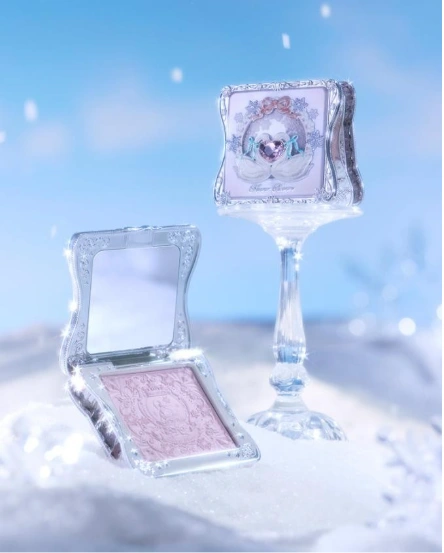
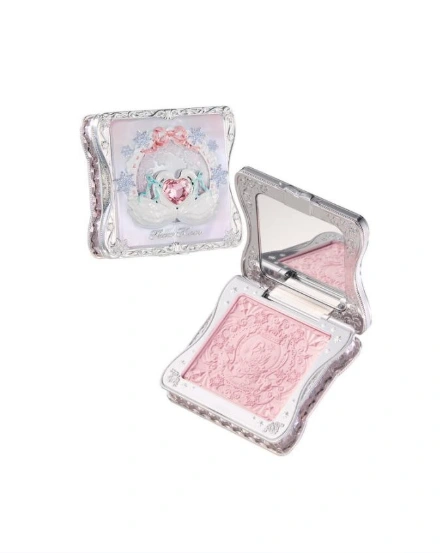
Once the base is set, apply powder blush gradually instead of trying to get full color in one pass. Pick up a small amount on the brush, tap off excess, and sweep it onto the cheeks with light pressure. Thin layers look more natural and are easier to balance from side to side. This is also where formula matters. Flower Knows Snow Ballet Air Blush in 01 Snowy Strawberry is a soft milky pink with a finely milled, ultra-fine powder texture that glides on smoothly. Its soft-focus finish works well alone or layered, making controlled buildup easier without a chalky look.
Adjust the Order to the Makeup Underneath
When Foundation Sets Without Extra Powder
Some foundations dry down on their own and do not need much help from setting powder. In that case, you can move straight to powder blush as long as the surface no longer feels tacky. The key test is how the brush moves. If it glides without dragging or sticking, the base is ready. This approach can keep the skin looking fresher and less powdery, especially if you prefer a more natural finish. You still want the same principle: powder blush belongs on a stable base. If the cheek area is smooth and set already, adding more powder first is not always necessary.
When You Wear Cream Blush Beneath Powder Blush
If you use cream blush first and want to top it with powder blush, keep the order structured. Apply foundation and concealer, then blend in the cream blush while the complexion still has some flexibility. After that, use a light layer of setting powder to lock the cream products in place without covering them completely. Finish with powder blush to add depth, adjust tone, or increase wear time. This layered method works well when you want more color payoff and better longevity. The powder blush should act like a finishing veil, not a heavy second blush that overwhelms the cream underneath.
Conclusion
Powder blush should generally go after setting powder because it blends better, looks more even, and stays easier to control. A settled base prevents patchiness, while applying blush near the end lets you judge the true color before finishing the rest of the face. The most reliable sequence is foundation, concealer, setting powder where needed, then powder blush in light layers. If your foundation already dries down smoothly, you can skip extra powder and apply blush directly. If you wear cream blush first, set it lightly before adding powder blush. In most routines, setting powder first gives the cleanest, most predictable result.